
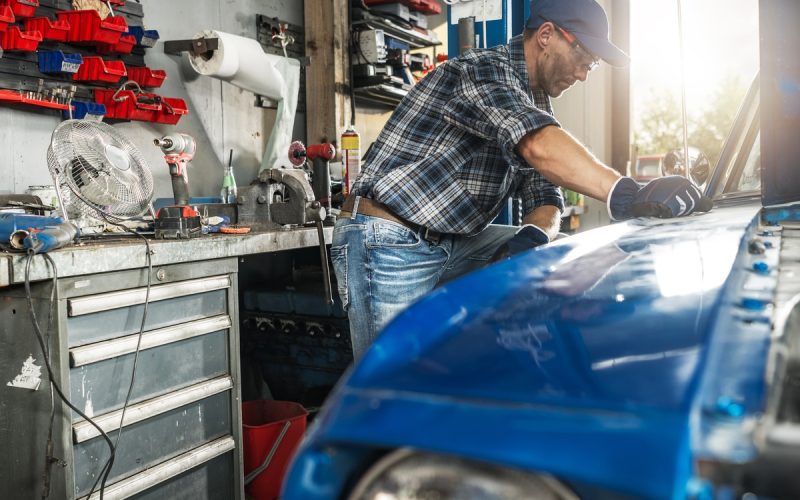
A free Saturday in the garage gives you more than a way to kill a few hours. Pick the right project, and you come out of the weekend with a better car and a skill you will still use years from now.
If you want weekend garage projects that build real skills, look for jobs that make you slow down and figure out how something works. You do not need a full restoration sitting on jack stands. A smaller project teaches you plenty when you approach it with patience and finish the job properly.
Bring Faded Paint Back to Life
Paint correction teaches you patience fast. You can look at a dull hood and assume it needs repainting, but sometimes the surface simply needs proper cleaning and polishing.
Start by washing the area thoroughly, then inspect the paint under good light. You want to see whether the problem comes from surface contamination or light defects rather than damaged clear coat.
Work One Panel at a Time
Do not attack the entire car because the first section looks better. Work slowly and check your progress.
This teaches you how different products behave and how much pressure the surface needs. You also start noticing the difference between a defect you can improve and damage that needs professional repair.
Fix Loose Interior Trim
Interior rattles drive people crazy because the problem usually sounds bigger than it is. A loose panel gives you a good excuse to learn how automotive trim comes apart.
Most pieces use clips or hidden fasteners, so brute force usually makes the job worse. Before pulling anything, find out where the attachment points sit.
Use trim tools instead of a screwdriver when possible. Then work around the panel until you find the loose area.
You may discover a broken clip or a fastener that backed out over time. Once you find the cause, fix it instead of stuffing material behind the panel and hoping the noise disappears.
This kind of project teaches you restraint. You learn when to pull harder and when to stop before something snaps.
Restore a Worn Car Seat
A tired seat changes how an otherwise decent car feels. Torn fabric or sagging upholstery can make the whole interior look neglected, so seat repair is a satisfying place to start.
Begin by removing the seat carefully and taking photos as you go. Those pictures help when you forget how a clip or bracket sat before you pulled everything apart.
Once the cover comes off, look at how the upholstery attaches to the frame. This is where understanding hog ring fastening strategies for long-lasting auto seats becomes useful.
You will see how fastening points hold the material in place so the cover doesn’t shift after you reinstall the seat. Take your time with tension.
Pulling the material too hard can distort the shape. Leaving it loose gives you wrinkles that will bother you every time you get behind the wheel.
By the end, you have practiced disassembly and careful reassembly. More importantly, you have learned to notice how materials fit together instead of treating the seat like one big mystery.
Refresh Cloudy Headlights
Cloudy headlights make a car look older than it is. They also give you a manageable project with an obvious before-and-after result.
Clean the lens first so you can see what you are dealing with. If the haze sits on the surface, a restoration kit gives you a good introduction to sanding and polishing.
The work feels strange at first because you intentionally dull the lens before restoring clarity. Follow the steps carefully!
Each stage builds on the last. Skip a grit or rush the sanding, and you will see the mistake later.
You start understanding why preparation matters instead of viewing it as the boring part before the “real” work.
Learn a Basic Brake Inspection
You do not have to replace the entire braking system to learn something from it. A basic inspection teaches you how to look at wear instead of waiting for a warning light or strange noise.
Start with the vehicle safely supported before you remove a wheel. Then look at the condition of the visible components.
The goal isn’t to turn yourself into a brake technician in one afternoon. You are learning what normal wear looks like and when something deserves professional attention.
Know When the Project Stops
Some garage skills involve knowing when to stop. If you find damage you do not understand, stop.
There is no prize for forcing your way through a safety-critical repair because you already started taking things apart. Knowing your limits is part of becoming better with tools.
Clean and Protect the Engine Bay
Engine bay cleaning teaches you how to work around parts you should not soak carelessly. It also forces you to look closely at an area you may normally ignore.
Start with a cool engine. Remove loose debris by hand or with a soft brush, then use a cleaner suited for automotive surfaces.
Avoid turning the hose into a pressure washer. Work deliberately around electrical connections and sensitive areas.
While you are in there, pay attention to anything that looks unusual. You also get more familiar with where basic components sit.
That familiarity helps later when you need to check something under the hood and do not want to stare at the engine as if it came from another planet.
Pick Projects That Make You Better
The weekend garage projects that build real skills are not always the biggest one. You get more from finishing a smaller job properly than starting an ambitious one and leaving the car half apart for three weekends.
Choose a project slightly outside your comfort zone. Read enough to understand the steps before you grab a tool.
Then give yourself time to make mistakes without rushing. As you work through weekend garage projects that build real skills, you start noticing a change in how you approach problems.
A loose panel stops feeling mysterious, and a worn seat becomes something you can take apart and understand.
That confidence does not come from owning expensive equipment. It comes from doing the work.
One finished project leads to the next, and before long, your garage becomes less about storing tools and more about knowing how to use them.