
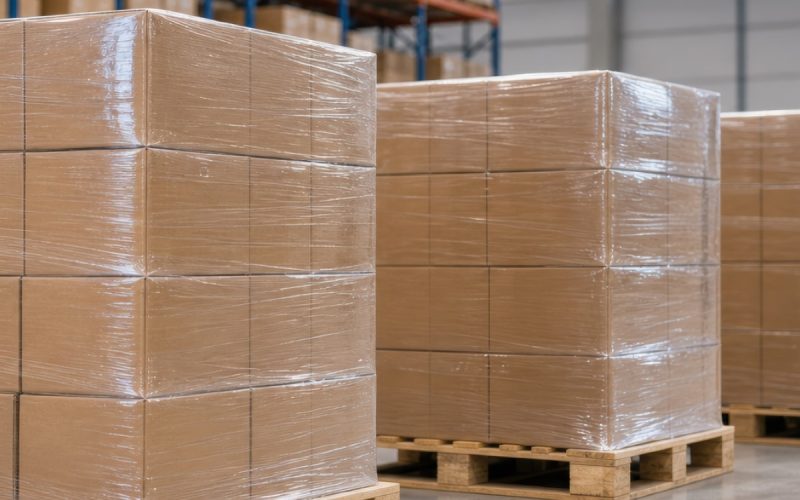
Robotic palletizing has become an important end-of-line automation option for companies that need to move packaged products from production lines onto pallets efficiently. Instead of relying on workers to perform repetitive lifting throughout a shift, a robotic system can handle defined stacking patterns with consistent motion. The technology can also accommodate many packaging formats when engineers configure the equipment around the application. Understanding the industries that benefit from robotic palletizers clarifies where these systems reduce labor strain, improve workflow consistency, and support changing production demands without long hours of manual palletizing.
Food and Beverage Manufacturing
Food and beverage operations often run high-volume production lines where packaged goods must move quickly toward storage or distribution. Consistent placement can help create orderly loads that are easier to wrap and transport.
Automation also helps facilities manage repetitive lifting at the end of a production line. Workers can focus on tasks that require judgment or oversight while the robot performs predictable palletizing motions. When product sizes or packaging configurations change, manufacturers may be able to adjust recipes, tooling, or programming to support different runs. This flexibility makes robotic palletizing useful for producers that handle multiple products across the same facility.
Consumer Packaged Goods
Consumer packaged goods manufacturers frequently produce large quantities of items that must be packed and palletized before shipment. A robotic palletizer can support this process by providing repeatable handling at the point where finished cases leave packaging equipment. The system follows programmed movements, which helps maintain a predictable palletizing process across extended production periods.
Warehousing and Distribution
Warehouses and distribution centers handle products arriving from many production environments, making reliable material handling essential. Robotic palletizing can help facilities build outbound loads or reorganize incoming goods for storage and fulfillment. When products follow defined handling requirements, robots can perform repeated placement tasks without the fatigue associated with manual palletizing.
Distribution operations may also benefit from the consistency that automated systems bring to load building. Predictable placement supports smoother downstream handling and can reduce unnecessary interruptions caused by inconsistent stacking. Facilities considering automation should evaluate product characteristics, available floor space, throughput requirements, and surrounding equipment before selecting a solution. Careful planning helps teams create and implement a successful palletizing system that fits naturally into the broader material flow instead of operating as an isolated piece of equipment.
Pharmaceutical and Personal Care Production
Pharmaceutical and personal care manufacturers often depend on controlled processes and repeatable packaging workflows. Once products have been placed into shipping cases, robotic palletizers can automate the final stacking stage before loads move toward storage or distribution. The robot performs programmed motions consistently, helping facilities maintain an organized end-of-line process.
Building Materials and Industrial Products
Manufacturers of building materials and industrial products may need to palletize items that are heavy, repetitive, or awkward to handle manually. Depending on the application, robotic systems can move bags, boxes, containers, or other packaged materials into stable pallet patterns. This approach can reduce the physical burden associated with repeatedly lifting substantial products during a shift.
Chemical and Household Product Manufacturing
Chemical and household product manufacturers often package finished goods in cases, jugs, pails, or other containers that eventually require palletizing. Robotic systems can automate this final handling step when products and packaging are compatible with the selected tooling. By following programmed patterns, the robot can repeatedly position items while supporting a steady flow from upstream packaging equipment.
Automation can be particularly useful in facilities where palletizing creates a production bottleneck. A system designed around the required throughput can help keep finished products moving without forcing workers to match repetitive machine-paced lifting. Manufacturers should account for package stability and handling requirements when designing the cell. Appropriate guarding and controls also play an essential role in integrating robotic equipment into the production environment.
E-Commerce and Fulfillment Operations
E-commerce growth has increased the pressure on fulfillment operations to move goods efficiently through increasingly automated facilities. While individual order profiles can vary widely, robotic palletizing can support applications where cartons or standardized loads need to be arranged for outbound transportation. Systems can integrate with conveyors and other material-handling equipment to create a more coordinated workflow.
The value of robotic palletizing depends on how predictable the products and load patterns are. Facilities with suitable applications can use automation to reduce repetitive manual handling while maintaining consistent movement through the shipping process. As fulfillment networks evolve, flexible system design can help operators adapt equipment to changing carton sizes, throughput needs, or distribution strategies without rebuilding the entire end-of-line process.
Agriculture and Pet Food Processing
Agricultural processors and pet food manufacturers commonly package products in bags or cases that must be stacked for storage and shipment. Repeatedly handling these packages can be physically demanding, particularly when facilities process substantial volumes. Robotic palletizers can take over the repetitive stacking motion and build programmed load patterns throughout production.
Bagged products require tooling that can grip and place flexible packaging without disrupting the product or compromising the load. Case-packed goods present different handling considerations. Selecting equipment around the actual package characteristics helps create a dependable solution. For processors seeking end-of-line consistency, robotic palletizing offers a practical automation path while freeing employees for equipment monitoring and other tasks.
Choosing Robotic Palletizing for Your Industry
The right palletizing solution depends on more than industry category alone. Product dimensions, package type, line speed, pallet configuration, available space, and future production plans all influence system design. Companies should evaluate how materials arrive at the palletizing area and what must happen after the pallet is complete. This broader view helps ensure automation supports the entire operation.
A well-designed robotic cell should match current requirements while leaving reasonable room for operational change. Businesses may need different tooling or updated programming as products evolve. Planning for those possibilities can extend the usefulness of the system and make future adjustments easier to manage.
Bringing Robotic Palletizing Into Your Operation
Companies across manufacturing and distribution continue to automate repetitive end-of-line work as they seek more consistent material handling and better use of available labor. The industries that benefit from robotic palletizers vary widely because palletizing appears in many production and fulfillment environments. A successful application starts with a clear understanding of the product, required throughput, available space, and surrounding processes. When businesses align the system with practical needs, they build automation that ensures reliable pallet handling and frees employees for higher-value work.