
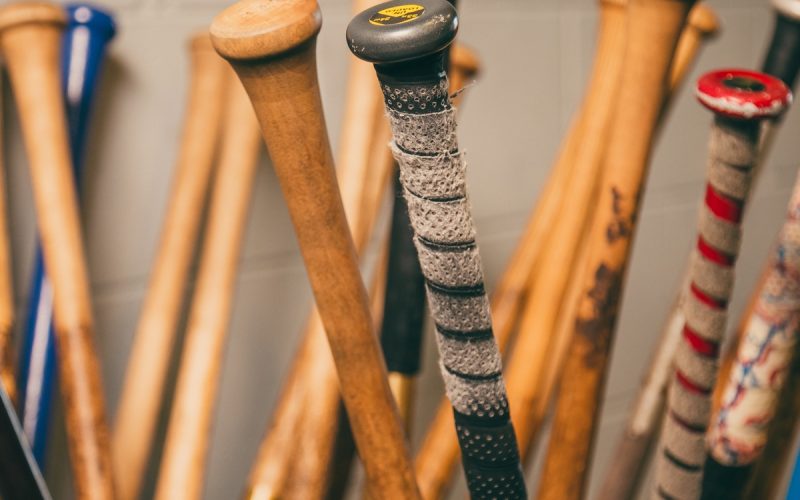
A baseball bat looks simple from the dugout: barrel, handle, knob, and enough pine tar or grip tape to make it look like somebody cares about details. Cut through the marketing names and glossy paint, though, and modern non-wood bats can hide some surprisingly complex engineering.
What’s inside a baseball bat matters because it can influence how the barrel flexes, how much vibration reaches your hands, and how long the bat survives regular use. That makes the stuff you cannot see almost as important as the logo or stylish design.
Not Every Bat Is Hollow in the Same Way
If you picture the inside of a metal bat as one big empty tube, you are not completely wrong, but you are not completely right either. Manufacturers use different materials, wall designs, collars, connection systems, and reinforcement methods depending on the model.
A one-piece alloy bat may have a straightforward structure, while a two-piece composite model can look more like a small engineering project. Hybrid bats mix those ideas by pairing materials such as an alloy barrel with a composite handle or internal composite reinforcement.
That variety explains why two bats with the same length, weight, and certification can feel completely different.
Alloy Barrels Rely on Carefully Designed Walls
Alloy bats use metal blends that form into barrel walls to balance stiffness, weight, durability, and response. Manufacturers can change wall thickness in different areas of the barrel to control how the bat behaves on contact.
Some designs use multiple wall thicknesses rather than making the entire barrel uniform. That lets engineers remove weight where they can and reinforce areas that experience greater stress.
This matters because barrel flex affects feel and performance. Too rigid, and the bat can feel harsh; too flexible, and durability can become a problem.
Composite Bats Work More Like Layered Structures
Composite barrels rely on layers of engineered material rather than a single metal shell. Manufacturers can orient and distribute those layers to tune stiffness, weight distribution, and the size of the effective hitting area.
That layered construction gives designers plenty of control over how the barrel responds. It also helps explain why composite and alloy bats can behave differently even when their exterior dimensions look almost identical.
Composite bats may also handle vibration differently because the material does not transmit impact exactly like aluminum alloy. For a hitter who has ever caught a pitch near the hands on a cold morning, less sting qualifies as a legitimate quality-of-life improvement.
Some Bats Have Internal Rings or Collars
One of the more interesting things hiding inside certain bats is an internal ring or collar. These components can serve different purposes depending on the model, so treating every ring as the same piece of hardware misses an important distinction.
A ring may limit barrel flex, reinforce part of the structure, or help manage vibration. In certain designs, one component can contribute to more than one of those jobs.
That is why there can be some not-so-cool side effects to removing a ring. It’s not comparable to taking an unnecessary washer off a backyard grill. If the manufacturer designed that component to support the barrel, removing it can change the way the surrounding material handles stress.
End Caps Do More Than Cover the Hole
The end cap may look like the baseball-bat equivalent of putting a lid on a coffee cup, but it plays a meaningful role in the final design. Its weight and construction can influence balance, swing feel, and the behavior of the barrel near its end.
Manufacturers can use lighter end caps to shift the weight toward the hands. Other designs may contribute to barrel stiffness or work with the surrounding structure to control vibration.
End caps also protect the internal construction from dirt and debris. That sounds mundane until you imagine swinging a bat that rattles like a maraca every time you walk to the plate.
Two-Piece Bats Add a Connection Point
A two-piece bat separates the barrel and handle, then joins them with a connection system. Manufacturers use these designs to control flex and reduce how much unpleasant vibration travels from the barrel into the hitter’s hands.
The connector itself may include composite materials, molded components, or other engineered pieces. Its exact construction varies by manufacturer and model.
Two-piece construction can also change how a bat feels during the swing. Some hitters like the added flex, while others prefer the more direct sensation of a stiff one-piece bat.
The Knob and Handle Affect More Than Comfort
Most players spend more time thinking about the barrel than the handle, but the lower half of the bat plays a major role in control. Handle diameter, stiffness, grip material, and knob shape all affect how the bat sits in the hands.
A softer grip can reduce some vibration and make extended hitting sessions more comfortable. The handle’s underlying material and construction determine how much flex the hitter feels during the swing.
Even small differences near the knob can change perceived balance. Since a hitter controls the bat from that end, a little weight shift can feel much bigger than it looks on a specification sheet.
Internal Construction Explains Bat Feel
Now that we understand what’s inside a baseball bat, why does it matter? Players sometimes describe one bat as smooth, another as stiff, and another as having a huge sweet spot. Those descriptions may sound subjective, but the sensations usually connect to real differences in construction.
Wall thickness, composite layup, connectors, collars, and weight distribution all influence the way impact travels through a bat. The exterior tells only part of the story.
That is why shopping strictly by drop weight and barrel diameter can miss useful information. Two 32-inch bats with the same weight can swing and respond very differently because their mass sits in different places.
Modifications Can Change More Than Performance
Once you understand how these components connect, internal modifications become easier to put in perspective. Removing material, changing internal supports, or altering a composite barrel can affect durability and structural behavior as well as performance.
A change that creates more barrel flex may also place greater stress on other parts of the bat. More movement is not automatically better if the surrounding structure cannot handle it.
Players also must consider equipment rules before using an altered bat in organized competition. A certified bat may no longer meet the applicable rules after modification, so players should check league requirements before game use.
The Inside Tells the Real Story
Modern bats pack a lot of engineering into something that does one wonderfully simple task: hit a baseball very hard. Materials, internal supports, connection systems, and weight distribution all contribute to what a player feels when the ball meets the barrel.
Knowing what is under the paint will not turn a warning-track fly ball into a moonshot by itself. It will, however, make you a much smarter judge of why one bat feels great in your hands while another feels like expensive plumbing.