
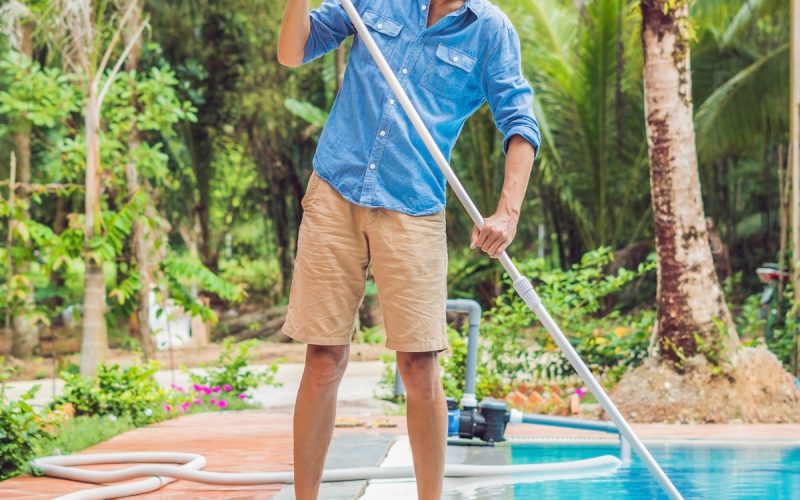
Owning a pool is awesome until it’s time to maintain it. The good news is that plenty of pool maintenance tasks are easy enough to handle yourself, but a few jobs are definitely better left to the pros. Knowing the difference can save you money, prevent costly repairs, and keep your pool ready whenever it’s time to cool off.
The Pool Jobs You Can DIY
Testing your pool water is one of the easiest and most important maintenance tasks. Check the water a couple of times each week and keep the pH, chlorine, alkalinity, and calcium hardness within the recommended ranges.
Cleaning out debris is another simple win. A quick skim every few days and a robotic pool vacuum once a week will keep leaves, dirt, and algae from taking over.
After heavy rain or high winds, you’ll usually need to do a little extra cleanup. Knowing how to clean your pool after a big storm allows you to check everything properly before jumping back in.
Don’t forget about the skimmer and pump baskets. Emptying them only takes a few minutes and helps your pool’s circulation system keep everything running smoothly.
Filter maintenance is also manageable for most pool owners. Cartridge filters need occasional rinsing, while sand and DE filters require backwashing when the water pressure gets too high.
Weekly pool shocking is another DIY-friendly task. Adding shock after heavy use, rainstorms, or backyard parties helps restore water quality and keeps everything fresh.
When It’s Time To Call a Professional
Pool equipment repairs are one area where confidence shouldn’t replace experience. Pumps, heaters, and filters involve electricity, pressure, and sometimes gas, making mistakes both expensive and dangerous.
Plumbing leaks are another concern best handled by a pool professional. Finding underground leaks often requires specialized equipment that most homeowners don’t have sitting in the garage.
Structural cracks in the pool shell deserve expert attention, too. What looks like a small cosmetic crack could actually lead to major water damage if ignored.
Replastering or resurfacing an in-ground pool is also far beyond a typical weekend project. The process requires draining the pool, preparing the surface, applying new materials, and carefully balancing the water afterward.
Work Smarter, Not Harder
There’s nothing wrong with tackling the easy tasks yourself. In fact, regular pool maintenance keeps your pool cleaner, extends the life of your equipment, and saves you money over time. The trick is knowing what you can and can’t DIY when it comes to swimming pool maintenance.