
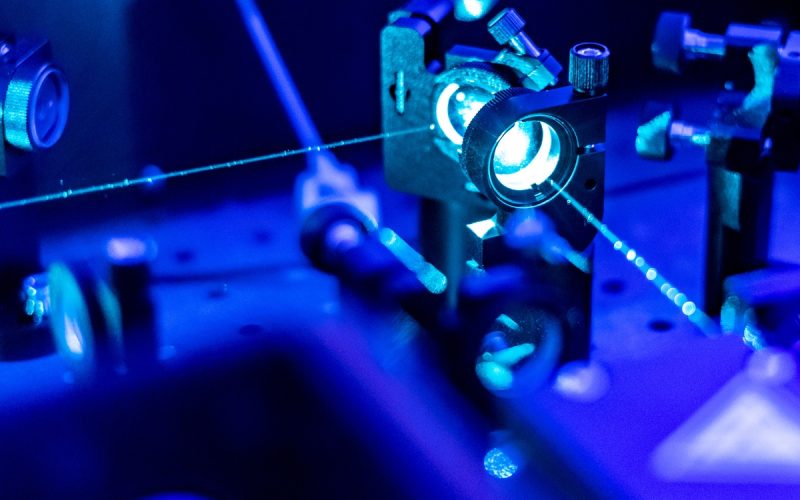
Laser tracking technology might not sound like the most thrilling topic at first glance, but peel back the scientific layers, and you’ll find a world of fascinating applications and crazy-cool functionality that’s impossible to ignore.
From enhancing industries to exploring outer space, laser tracking technology is all around us, often doing things we totally take for granted. Here’s the fun part though, it’s also about how those lasers are making the world run smoother, faster, and a heck of a lot cooler.
Intrigued yet? Stick around as we spotlight our favorite fun facts about laser tracking technology.
What Industries Benefit From Laser Tracking Technology?
Believe it or not, laser tracking isn’t reserved for rocket scientists or tech whizzes; it has a direct impact on industries we interact with daily. Construction, aviation, automotive, and even your favorite gadget manufacturers are all in on the action. How? By relying on lasers to make processes faster, smarter, and far more precise.
Think about it. The car you drive or the phone stuffed in your pocket didn’t come from sloppy measurements. Precision matters with laser tracking tooling, ensuring every groove and fit is spot-on.
Whether it’s a sleek Tesla rolling off the production line or the streamlined fuselage of a Boeing 747, these lasers are the pinpoint heroes keeping quality control razor-sharp. You might not realize it, but lasers are shaping better, more precise products for people just like you, one zap at a time.
Lasers and Space
Here’s where laser tracking really starts to feel otherworldly. Did you know lasers play a massive role in tracking satellites and space exploration? NASA and other space agencies have a full-on love affair with lasers because they monitor satellites zipping around Earth at ridiculous speeds.
But wait, it gets wilder. Lasers can also measure the distance between planets. Yep, they’re shooting pinpoint beams of light to figure out just how far everything is from us. They’re like cosmic rulers, keeping tabs on floating hunks of rock and high-tech equipment we’ve flung into space. Without these trackers, that image of a black hole or those GPS signals helping you find the nearest burger joint would be a lot harder to nail down.
Lasers on the Ground
Coming back down to Earth, laser tracking tech has completely transformed construction projects and large-scale builds. Tracking a skyscraper into existence or a mega bridge across a canyon demands insane accuracy, and that’s where lasers come in.
Imagine trying to align a massive steel beam down to the millimeter without the help of these tools. It’s not happening. Lasers ensure everything lines up perfectly so that the buildings we live and work in don’t just look good but stand the test of time, too.
They’re even used by archeologists to map out ancient ruins. Turns out, lasers aren’t just about futuristic landscapes; they’re also preserving the past. Talk about versatility.
From outer space to ancient ruins, lasers are proving themselves as one of the most versatile tracking technologies in the game. They bring a level of precision and innovation that directly influences how life functions, from the bridges you cross every day to the distance that rover just measured on Mars.