
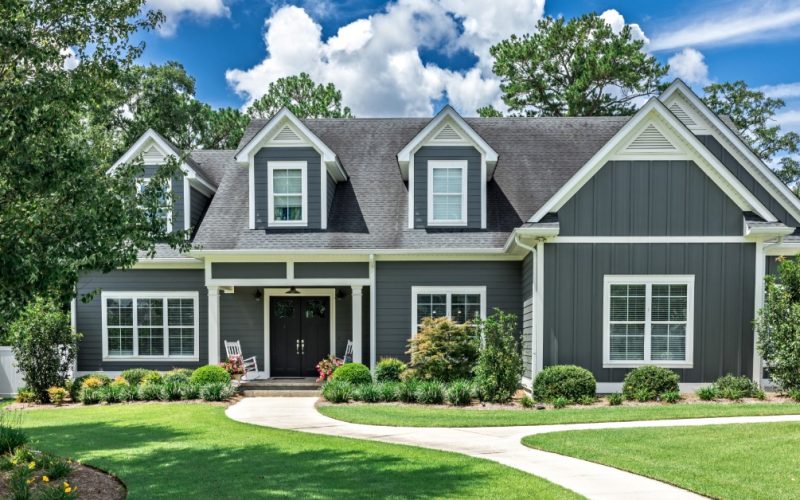
You don’t need to rebuild half your house to make the exterior look better. A handful of smart upgrades can make the place look sharper, more intentional, and a lot less like you stopped caring once you finished the interior.
The best exterior features do more than elevate your home’s design, too. They can improve privacy, usability, comfort, and even how much you enjoy pulling into your own driveway at the end of the day.
Give the Front Door Some Attention
Your home’s front door is one of the first things people notice, yet it’s surprisingly easy to treat it as an afterthought. The door’s color, material, shape, hardware, and surrounding trim can all change the personality of the entrance area.
The trick is to choose something that actually belongs with the architecture rather than grabbing the coolest-looking door in isolation. For instance, matching an iron door to your home’s architecture means considering details such as rooflines, window shapes, scale, finishes, and existing exterior materials, all of which can help inform the choice.
A modern house usually benefits from a door with clean lines and restrained detailing. Traditional, Mediterranean, or Southwestern designs can often handle more curves, texture, and decorative elements without looking like the front entrance is trying too hard.
Upgrade Your Exterior Lighting
Good exterior lighting pulls double duty. It helps you see where you’re going at night while adding another layer of style to the home once the sun goes down.
Consider lighting the entrance, garage, walkways, patio, and any architectural details that are worth highlighting. Matching every fixture perfectly isn’t necessary, but keeping finishes and general design styles related creates a cleaner result.
And be sure to aim those ultra-bright security lights carefully. Your driveway needs illumination, but the guy across the street probably doesn’t need his bedroom lit up like an NFL stadium.
Make the Garage Part of the Design
Garage doors can take up a huge percentage of the front of a house, particularly on newer suburban homes. Leaving them out of your design plans is basically ignoring one of the biggest things everyone can see.
Updating the color, hardware, windows, or door style can make the garage feel connected to the rest of the home’s exterior. Even something as simple as repainting a faded door can make the whole property look better maintained.
If you’re replacing the garage doors, consider the lines already present in your home’s windows, siding, and entryway. Repeating a few visual cues creates cohesion without making everything identical.
Add Structure With Landscaping
Landscaping doesn’t require transforming your entire yard into a botanical garden that demands maintenance every Saturday morning forever. A few deliberate choices can create structure and frame the house nicely.
Use shrubs, ornamental grasses, small trees, or planters to draw attention toward entrances and soften large blank areas. Keeping plants appropriately scaled is important because tiny shrubs can disappear against a large house, while oversized plants can swallow up windows and walkways.
Hardscaping matters as well. Defined paths, stone borders, retaining walls, and clean edging can make relatively basic landscaping look much more finished.
Pay Attention to the Smaller Hardware
Some of the easiest exterior features to overlook are also among the simplest to change. House numbers, door handles, mailboxes, exterior faucets, gates, and light fixtures all contribute to the overall impression of a home.
You don’t have to buy an expensive matching collection. Instead, stick with a reasonably consistent family of finishes and styles so the details look deliberate rather than accumulated over 15 years of random hardware store runs.
Large, clearly visible house numbers are especially useful. They can add a modern graphic element while making life easier for guests and delivery drivers who are tired of playing detective when looking for your home.
Create an Outdoor Space You’ll Actually Use
A patio can look fantastic in photos and still be completely useless if nobody wants to sit there. Design an outdoor living area around what you genuinely prefer to do rather than what looks impressive on a mood board.
If grilling is your thing, create enough space around the grill for prep and seating. If evenings outside sound better, comfortable chairs, shade, lighting, and maybe a fire feature can turn an empty corner of the yard into a place worth using.
Privacy can make a big difference, too. Screens, fencing, pergolas, and strategic landscaping can establish some separation without making the backyard feel like a fortress.
Keep Materials and Colors Connected
One common exterior design mistake is treating every upgrade as an independent project. The new door looks great, the lights look great, and the garage looks great—but somehow none of them look great together.
Before changing anything major, identify the dominant materials and colors already on the house. Brick, stone, siding, stucco, roofing, trim, and window frames give you a palette to work from.
You don’t need everything to match. In fact, some contrast usually makes a home exterior more interesting, but repeating a few colors, shapes, or finishes helps separate intentional contrast from visual chaos.
Don’t Forget the Sides and Back of the House
Curb appeal gets most of the attention because the front of the house is what everyone sees first. But you’re the one living there, so the parts that aren’t visible from the street deserve some effort as well.
Consider whether side paths need better lighting, whether utility areas could use screening, or whether the backyard entrance feels disconnected from the rest of the house. These less glamorous upgrades can make the property noticeably nicer to use every day.
Make the Exterior Feel Intentional
A strong home exterior isn’t necessarily the one with the most expensive materials or elaborate landscaping. Usually, it’s the one where the major elements seem to belong together.
Start with the exterior features that elevate your home’s design and have the biggest visual impact, then work down to smaller details. When the entrance, lighting, garage, landscaping, hardware, and outdoor spaces share a common design language, even straightforward improvements can make your home feel considerably more polished.