
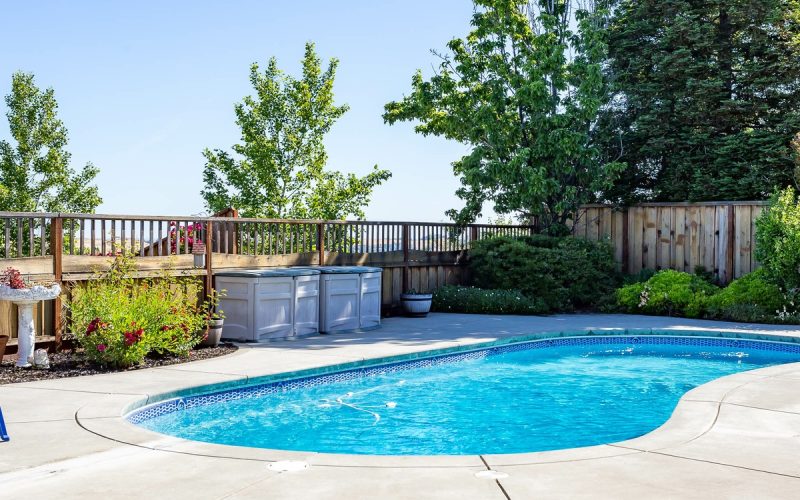
Adding water features to a backyard can completely change how the space feels. The sound, movement, and visual contrast can turn an ordinary patio or lawn into a place where you actually want to hang out after work.
The trick is keeping the water feature in proportion to everything around it. The best ways to add water features without overwhelming your yard bring something to the space without swallowing the lawn, patio, grilling area, or other parts you already use.
Start With What You Actually Want From the Water
Before buying anything, figure out what job the water feature needs to do. Some want a quiet place to unwind, while others want something that makes the backyard more interesting when friends come over.
That distinction can immediately narrow your choices. A fountain makes sense when atmosphere is the priority, while a pool or spa is ideal if you want to get into the water.
Think about maintenance at this stage, too. A feature that looks great but demands more weekend upkeep than you’re willing to give it probably isn’t the right addition.
Go Vertical With a Wall Fountain
A wall-mounted or freestanding vertical fountain delivers plenty of sound and movement without occupying much ground space. It can work particularly well against a fence, privacy wall, garage, or the edge of a patio.
Simple stone, concrete, steel, and dark-finished designs give a backyard a clean look without making it feel overly decorated. Place a chair or two nearby, and a previously ignored corner can become a legitimate place to relax.
Consider a Plunge Pool
A swimming pool doesn’t necessarily need to become the entire backyard. If your main goals are cooling down, relaxing, and having somewhere to hang out in the water, a smaller footprint may be enough.
Plunge pools are designed around that idea, taking up less space while leaving room for landscaping, seating, pathways, or an outdoor cooking area. Understanding the differences between plunge pools and traditional pools can help you judge whether sacrificing swimming space in exchange for more usable yard makes sense.
Placement matters just as much as size. Positioning a compact pool along the edge of a patio or yard can make it feel like part of the overall layout instead of dropping a large object into the middle of the property.
Build a Small Pond Into the Landscaping
You don’t need a massive koi pond to get the natural look of water. A small pond surrounded by rocks, grasses, and established plants can blend into a landscape while taking up surprisingly little room.
Irregular shapes usually work well when you’re going for a natural appearance. Rather than making the pond the dominant attraction, use plants and stone to visually connect it with the rest of the yard.
Keep its location practical as well. Putting a pond directly beneath trees, for example, can mean more leaves and organic debris ending up in the water, which would mean more maintenance for you.
Use a Compact Bubbling Feature
If a pond sounds like too much commitment, a bubbling rock or urn offers a simpler alternative. Water typically circulates through a concealed reservoir, so you get movement and sound without maintaining a large, exposed body of water.
These features fit easily beside patios, walkways, decks, and landscape beds. They are especially useful when you have an awkward patch of yard that isn’t large enough for furniture or another functional zone.
Add Water to a Fire Pit Area
Fire and water don’t have to compete for attention. A restrained fountain or bubbling feature near a fire pit seating area can give the space another layer of movement and sound.
Just avoid packing several major focal points into one tight area. If you’ve already invested in a substantial fire pit, outdoor TV, or cooking setup, keep the water feature simple enough to support the space rather than fight for attention.
Think About the Sound Level
Water features aren’t only visual, so consider how much noise you actually want. A strong waterfall can help cover nearby traffic or neighborhood sounds, but it may be louder than necessary in an otherwise quiet backyard.
For a more laid-back setup, gentle bubbling or a short water drop can provide background sound without dominating conversations. Testing different pump settings allows you to find a comfortable balance once the feature is installed.
Let Landscaping Do Some of the Work
One reason water features look oversized is that they’re visually isolated. A fountain sitting alone in the middle of an empty lawn will naturally demand more attention than one incorporated into an existing landscape bed.
Use ornamental grasses, shrubs, stone, mulch, and ground cover to soften the transition around the feature. The goal is to make the water look like it belongs there rather than something that was added as an afterthought.
Lighting can help after sunset, but restraint still matters. One or two low-voltage lights highlighting moving water will look cleaner than blasting the entire feature with bright illumination.
Protect the Yard’s Useful Space
A backyard still needs room to function. Before committing to a feature, think about where people walk, where you grill, where the dog runs, and where you might want to put furniture later.
Sketching the yard into simple zones can help you see what space is genuinely available. You may discover that a narrow fountain along a fence or a compact pool beside the patio works better than placing something directly in the center.
This is where adding water features without overwhelming your yard benefits from deliberate planning. Leaving open space around the feature makes the entire backyard feel bigger and the water itself feel more intentional.
Keep Scale Under Control
A good water feature shouldn’t make you wonder where the rest of your backyard went. Whether you choose a wall fountain, bubbling rock, small pond, or plunge pool, size it according to the space and how you realistically spend time outside.
When water elements complement the patio, landscaping, seating, and open areas instead of replacing them, the backyard becomes more useful as well as better looking. That’s ultimately the sweet spot: enough water to change the atmosphere without giving up the yard you wanted to improve.