
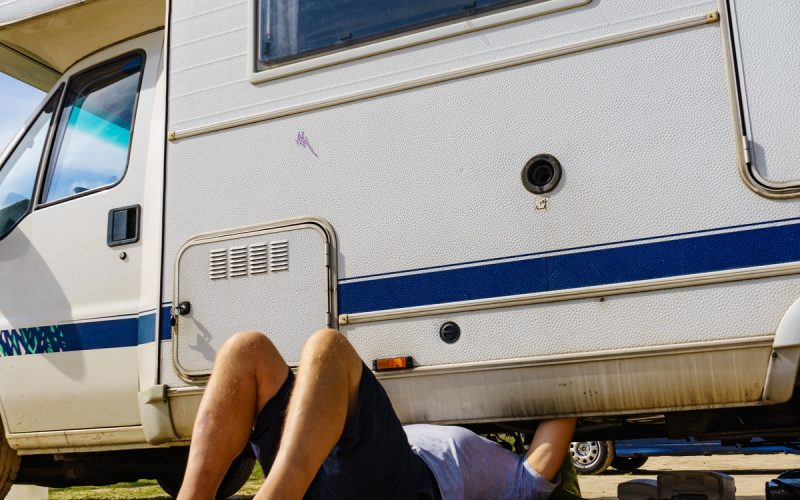
You tucked your RV away for the season, safe and sound. It sits there, unused, patiently waiting for your next adventure. So, when you finally pull it out of storage, you expect it to fire up without a hitch. Instead, you find a collection of unexpected problems, and you wonder what happened. Let’s look at the reasons why unused RVs still break down.
Plumbing Leaks
Your RV’s plumbing system dislikes inactivity. Water left in the lines or tanks creates the perfect environment for seals and gaskets to dry out, crack, and eventually leak.
Temperature fluctuations cause pipes to expand and contract, placing stress on fittings and joints. You might return to find a puddle under the sink or, worse, hidden water damage inside a wall or storage bay.
Lastly, a forgotten droplet in a line can freeze and burst a pipe during a cold snap, leaving you with a costly and messy repair before you even hit the road.
Battery Drainage
Even when you shut everything down, your RV’s batteries face a silent enemy: parasitic draw. Smoke detectors, propane detectors, and the stereo’s clock all sip a small amount of power continuously.
Over weeks or months, this slow drain depletes your batteries, potentially damaging them beyond recovery. A dead battery means no lights, no water pump, and no power for your slide-outs or jacks.
For motorhomes, a dead chassis battery also means your engine will not turn over, leaving your adventure stalled in your driveway.
Tire Damage
The weight of the RV presses down on the same section of each tire, causing flat spots to develop. These flat spots create an uncomfortable, bumpy ride and can affect the tire’s structural integrity.
Additionally, exposure to sunlight’s UV rays degrades the rubber, leading to cracks in the sidewalls, a condition known as dry rot. A tire might look fine, but dry rot weakens it from the inside out, increasing the risk of a dangerous blowout on the highway.
Neglected Monthly Maintenance
A machine with so many interconnected systems needs consistent oversight. Unfortunately, unused RVs still break down because they have gone without monthly maintenance.
Forgetting to run the generator, check tire pressure, or inspect seals allows minor issues to escalate. However, following a consistent RV maintenance checklist helps you stay ahead of potential breakdowns.
Roof and Seal Leaks
Your RV’s roof endures a constant beating from the elements, even in storage. Sun, rain, and temperature changes break down the sealants around vents, skylights, and seams.
As these seals become brittle and crack, they create pathways for water to seep in. A small, unnoticed roof leak can lead to extensive interior damage, promoting mold growth and rotting the wooden structure of your RV.
Window and door seals can also dry out and shrink, compromising their ability to keep water and pests outside where they belong.