
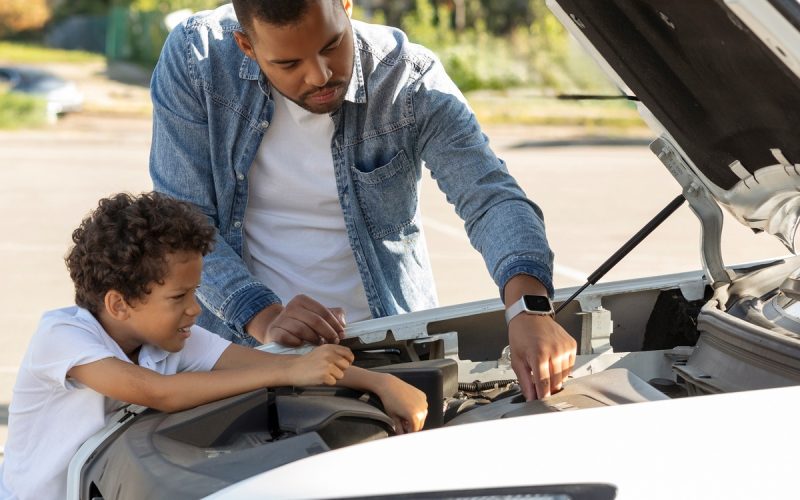
Knowing your way around a car doesn’t require a mechanic’s certification or a garage full of expensive tools. Every driver can learn simple car maintenance skills to catch problems early, keep your vehicle running reliably, and avoid preventable repairs.
Better yet, learning these skills makes you a more confident driver. Instead of staring at the engine bay like it contains alien technology, you can handle simple checks yourself and recognize when a problem actually deserves professional attention.
Get Comfortable Checking Your Oil
Checking engine oil ranks among the easiest car maintenance skills to master. Oil lubricates moving engine components and helps control heat, so maintaining the proper level plays an important role in engine health.
Park on level ground and follow your vehicle manufacturer’s directions for checking the oil. Many vehicles use a traditional dipstick, while some newer models provide an electronic oil-level reading through the dashboard or infotainment system.
With a dipstick, pull it out, wipe it clean, reinsert it fully, and check the level again. Look at the oil’s appearance while you’re there. Very low levels or noticeable contamination can signal that your car needs attention beyond a simple top-off.
Learn How To Inspect Your Tires
Your tires connect several thousand pounds of machinery to the pavement, so giving them a little attention makes sense. You don’t need specialized automotive knowledge to perform a useful visual inspection.
Start by checking tread depth and looking for uneven wear. Uneven patterns can point toward alignment problems, incorrect inflation, worn suspension components, or other issues. Learning how to identify damage to tire sidewalls also helps you spot cuts, cracking, bulges, and other warning signs before they become bigger concerns.
Check every tire rather than assuming they wear identically. Spend a few extra seconds looking at areas near the wheel and tread edges. Consider the spare tire too, because discovering a flat spare after getting a flat tire qualifies as some truly impressive bad luck.
Know What Lives Under the Hood
You don’t need to memorize every hose, wire, and mysterious plastic box under your hood. Still, knowing where the basic maintenance points sit can save time and make routine checks far less intimidating.
Open your owner’s manual and locate a few essentials. Depending on your vehicle, these may include:
- Engine oil dipstick and fill cap
- Windshield washer fluid reservoir
- Engine coolant reservoir
- Brake fluid reservoir
- Battery terminals
- Engine air filter housing
Spend a few minutes identifying these components before you actually need them. That way, you won’t find yourself searching for the washer fluid reservoir in a dark parking lot while holding a flashlight in your mouth.
Recognize Important Dashboard Lights
Modern dashboards can look like a Christmas tree when something goes wrong. Knowing what the major warning symbols mean helps you respond appropriately instead of choosing the classic strategy of hoping the light disappears tomorrow.
Start with the oil pressure, engine temperature, battery, brake, tire pressure, and check-engine indicators. Your owner’s manual explains exactly what each symbol means for your specific vehicle, making it a better resource than guessing from the tiny picture.
Not every warning light means you need to pull over immediately. Some indicate maintenance needs or systems that require inspection soon. Others can signal conditions that demand prompt action, so knowing the difference helps you make smarter decisions.
Check Fluids Without Making a Mess
Cars rely on several fluids to operate correctly, and drivers can monitor many of them without advanced mechanical knowledge. The exact fluids you can check yourself depend on the vehicle, so always consult the owner’s manual first.
Windshield washer fluid is an easy place to start. Coolant also deserves attention, although you should never open a pressurized cooling system while the engine remains hot. Hot coolant can cause severe burns, making patience an actual maintenance skill here.
If a fluid level repeatedly drops after you top it off, don’t keep pouring more in and calling the problem solved. A recurring loss may indicate a leak or mechanical issue that needs professional diagnosis.
Pay Attention to How Your Car Feels
One of the best maintenance skills requires no tools. You need to pay attention. Drivers who know how their cars normally sound and feel often notice small changes before those changes become expensive problems.
Listen for new noises when braking, accelerating, turning, or traveling over bumps. Notice unusual vibrations through the steering wheel or seat. If the car starts pulling to one side or handling differently, don’t automatically accept its new personality.
Smells can provide clues too. Burning odors, strong fuel smells, or sweet chemical scents deserve attention. You don’t need to diagnose the exact problem yourself. Recognizing that something changed gives you useful information to share with a qualified technician.
Build a Simple Maintenance Routine
Car maintenance becomes much easier when you stop treating it as something you only think about after a warning light appears. A basic routine helps you stay familiar with the vehicle and catch obvious concerns sooner.
Choose a regular interval for quick visual checks and follow the maintenance schedule in your owner’s manual. Mileage, vehicle age, climate, driving habits, and manufacturer requirements all influence when your car needs particular services.
Keep records of oil changes, tire service, battery replacements, inspections, and other maintenance. A simple note on your phone works fine. Good records help you remember what happened and give technicians useful context when your vehicle eventually needs professional service.
Know When To Hand the Tools Over
Learning basic maintenance doesn’t mean you need to become the neighborhood mechanic. In fact, one of the smartest automotive skills involves knowing when a job exceeds your knowledge, equipment, or comfort level.
Tasks involving brakes, fuel systems, high-voltage hybrid or EV components, major electrical work, or internal engine repairs often require specialized training and equipment. Trying to prove something to yourself while dismantling a critical system rarely ends with a fun weekend.
Handle the simple checks you can perform confidently and bring complicated concerns to a qualified technician. You’ll still gain the satisfaction of understanding your vehicle without accidentally creating a pile of leftover bolts.
Become a More Confident Car Owner
Learning basic car maintenance gives you more control over one of the most expensive things you own. Checking tires, monitoring fluids, recognizing warning lights, and noticing changes in vehicle behavior can help you prevent small concerns from quietly growing.
You don’t need to know everything at once. Start with one skill and build your knowledge over time. Before long, opening the hood won’t feel intimidating—and you might finally know what more than three of those things under there actually do.