
Water can silently damage a roofing system long before stains appear inside a home. Understanding how to prevent water damage in roofs begins with consistent maintenance that keeps moisture from reaching vulnerable areas and causing expensive repairs.
Inspect Roofing Materials Regularly
Routine roof inspections reveal cracked shingles, damaged sealants, and loose fasteners before leaks have a chance to spread. Finding these issues early makes repairs simpler and helps preserve the roof’s overall condition.
Weather gradually wears down roofing materials through repeated exposure to rain, wind, and changing temperatures. Examining the roof after major storms helps identify damage before small problems become larger concerns.
Paying attention to missing shingles and lifted roofing materials also reduces the risk of moisture entering beneath the surface. Prompt repairs help maintain the protective barrier that keeps the home dry throughout the year.
Keep Flashing in Excellent Condition
Flashing protects joints around chimneys, skylights, vents, and roof valleys where water commonly collects. Properly installed flashing directs rain away from these openings instead of allowing it to seep beneath roofing materials.
Regular inspections ensure flashing remains tightly secured without rust, cracks, or separated seams. Edge flashing helps prevent water damage in roofs by guiding water safely toward the gutter system instead of beneath the roof edge.
Replacing damaged flashing before leaks develop protects surrounding roofing materials from unnecessary deterioration. This simple maintenance task often prevents repairs that become far more expensive over time.
Maintain Proper Roof Drainage
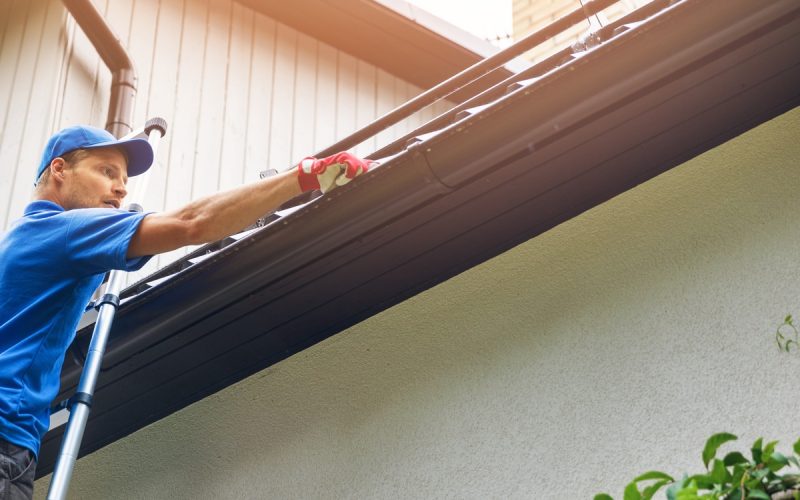
Clean gutters allow rainwater to flow freely away from the roof instead of backing up under shingles. Removing leaves and other debris throughout the year reduces standing water that can eventually cause leaks.
Downspouts should also direct water away from the home’s foundation to prevent moisture from collecting around the structure. Proper drainage protects both the roofing system and other exterior components from long-term water exposure.
Checking gutters after storms helps remove new debris before it creates blockages. Consistent maintenance keeps water moving efficiently during heavy rainfall.
Address Moisture Problems Quickly
Small signs of water damage often appear before significant structural issues develop. Homeowners should never ignore ceiling stains, damp attic insulation, and musty odors because these signs often indicate a hidden leak.
Quick repairs stop moisture from spreading into wood framing and insulation where additional damage can occur. Acting early also reduces the likelihood of mold growth and costly restoration work.
Protect Your Roof Before Problems Start
Routine inspections, proper drainage, and timely repairs all contribute to understanding how to prevent water damage in roofs before serious issues develop. Consistent care extends the life of the roofing system while protecting the home’s interior from avoidable water damage.