
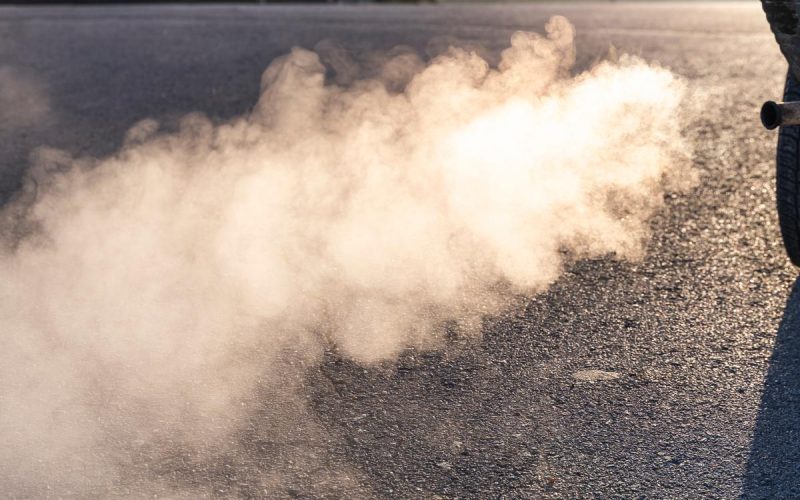
You’re pulling out of the driveway, glance in your mirror, and notice a puff of smoke trailing behind your truck. Now you’re wondering if you should panic or just keep driving.
The answer depends almost entirely on what color that smoke is and how much of it you see. Let’s dig into whether the smoke coming from your truck’s tailpipe is cause for concern.
White Smoke: Not Always Innocent
White smoke on a cold morning is usually just condensation burning off, and it disappears within a minute or two. If it sticks around after your engine warms up, though, that’s likely coolant getting into the combustion chamber, which points to a blown head gasket or a cracked engine block.
Blue Smoke: Your Engine Is Burning Oil
Blue or bluish-gray smoke means your engine is burning oil it shouldn’t be. This happens when worn piston rings or valve seals let oil sneak into the combustion chamber.
If you ignore it, you’ll be adding a quart of oil every few hundred miles before you know it.
Black Smoke: Too Much Fuel
Black smoke typically indicates that your engine is burning more fuel than it should. On a diesel truck, this is pretty common under heavy load.
However, constant black smoke points to a clogged air filter, a faulty injector, or a failing turbocharger that needs attention.
Gray Smoke: A Mixed Bag
Gray smoke can mean a few different things depending on your engine type. On a diesel, it often points to injector issues or turbo problems, while on a gas engine, it can signal a transmission fluid leak getting pulled into the intake.
When To Pull Over Immediately
Some smoke situations don’t give you the luxury of waiting to figure them out until the weekend.
Thick, continuous smoke paired with a loss of power, a rising temperature gauge, or a knocking sound is among the most urgent signs of engine failure. Driving through it can turn a repair into a total engine (or truck) replacement.
Don’t Guess; Get It Checked
Are you noticing a little puff of white smoke coming from your truck’s tailpipe on a frosty morning? That’s probably not cause for concern.
But if it’s smoke that lingers, changes colors on you, or shows up with other symptoms, your truck is waving a red flag. Trust your gut and get your vehicle in front of a mechanic before a manageable fix turns into an expensive lesson.